Resources: The Kit
Everything you need, nothing you don't.
The right kit fits your time and reflects your client’s expectations.
New resources are added here regularly.
Capturing
There isn’t a one size fits all setup. There is the setup that meets your strengths and your standards.
And you don’t need expensive gear to achieve high production value if you know what you’re doing, or you have the time to learn. There is no point in sugar coating it, a lot of it requires hands-on practice.
But remember as well, not all premium content needs to be video.
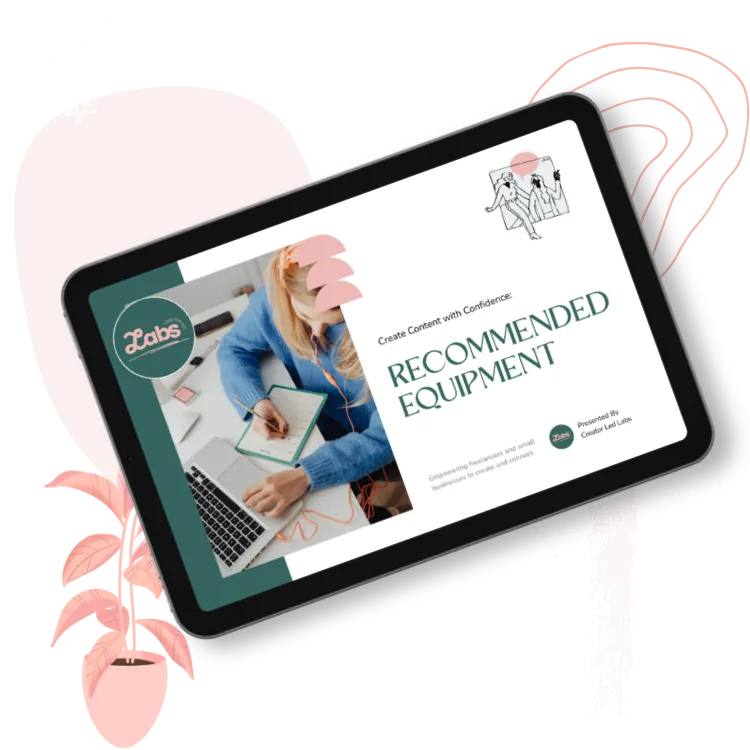
Below you will find a few examples of what we’ve used in different scenarios, depending on the type of content we were trying to create.
This isn’t a finite list, and we’ll continue to build on it. It should help you think more clearly about what you actually need.
It’s widely known that your phone’s rear camera has a better lens than the front camera, but it can be a real pain to shoot when you can’t see your frame. Here are a few solutions we’ve used:
MagSafe Mirror https://amzn.to/4tjSp0G
Best for having with you at all times and shooting on the go. It’s a bit of a trade-off, as you won’t be able to use a MagSafe mini tripod ring at the same time.
USB MagSafe Portable Monitor https://amzn.to/41gzuYk
This can be attached to the back of your phone, but doesn’t have to be, which means you can still mount your phone using a MagSafe ring or other tripod setups. That’s a big plus.
The downsides are that it’s not always very responsive when shooting in 4K, and it’s relatively heavy, so it may fall off depending on the strength of your MagSafe case.
Silicone Suction Case Adhesive https://amzn.to/4e5AoOS
Probably the most “cheap and cheerful” solution we’ve found for mounting your phone anywhere. It genuinely works on most surfaces.
The downside is that it often leads to using your front camera more than your rear camera.
Hollyland Lark M2 Wireless Lavalier Microphone
A huge upgrade in sound quality when filming on your phone. It’s plug-and-play, and like AirPods, the case also charges it.
The main limitation is that both channels are recorded into a single audio track. For some people, that’s ideal, but it does mean you can’t adjust each channel separately in post.
Sony A7C II (Mirrorless Camera) https://amzn.to/4mLL9s0
I spent a lot of time looking for the “perfect” camera, and eventually settled on the Sony A7C II.
As a mirrorless camera, it’s lighter and more compact than a DSLR, while still allowing you to use a wide range of lenses, including third-party options. It performs well for both photography and video, with strong autofocus tracking, which is essential for solo creators.
The fully articulating screen (not just tilt) makes a huge difference when filming yourself, as you can actually see your frame.
It is an investment, no doubt. But since my goal was to use it professionally, it felt like the most sensible choice.
Sony Shotgun Microphone https://amzn.to/4bUPFkg
The A7C has a built-in mic, but the quality is similar to shooting on your phone. This shotgun mic gives you much better range and cleaner audio, without needing to sync sound separately in post.
Where it struggles: if you’re using longer lenses and standing 2-3 metres away from your subject, especially in noisy environments, the audio quality can drop.
Manfrotto Befree Live Twist Tripod https://amzn.to/4tAXRMx
Works perfectly with the Sony and packs down so small, which is ideal if you’re carrying a lot of gear. Lightweight, compact, and very easy to use.
It’s widely known that your phone’s rear camera has a better lens than the front camera, but it can be a real pain to shoot when you can’t see your frame. Here are a few solutions we’ve used:
MagSafe Mirror https://amzn.to/4tjSp0G
Best for having with you at all times and shooting on the go. It’s a bit of a trade-off, as you won’t be able to use a MagSafe mini tripod ring at the same time.
USB MagSafe Portable Monitor https://amzn.to/41gzuYk
This can be attached to the back of your phone, but doesn’t have to be, which means you can still mount your phone using a MagSafe ring or other tripod setups. That’s a big plus.
The downsides are that it’s not always very responsive when shooting in 4K, and it’s relatively heavy, so it may fall off depending on the strength of your MagSafe case.
Silicone Suction Case Adhesive https://amzn.to/4e5AoOS
Probably the most “cheap and cheerful” solution we’ve found for mounting your phone anywhere. It genuinely works on most surfaces.
The downside is that it often leads to using your front camera more than your rear camera.
Hollyland Lark M2 Wireless Lavalier Microphone
A huge upgrade in sound quality when filming on your phone. It’s plug-and-play, and like AirPods, the case also charges it.
The main limitation is that both channels are recorded into a single audio track. For some people, that’s ideal, but it does mean you can’t adjust each channel separately in post.
Sony A7C II (Mirrorless Camera) https://amzn.to/4mLL9s0
I spent a lot of time looking for the “perfect” camera, and eventually settled on the Sony A7C II.
As a mirrorless camera, it’s lighter and more compact than a DSLR, while still allowing you to use a wide range of lenses, including third-party options. It performs well for both photography and video, with strong autofocus tracking, which is essential for solo creators.
The fully articulating screen (not just tilt) makes a huge difference when filming yourself, as you can actually see your frame.
It is an investment, no doubt. But since my goal was to use it professionally, it felt like the most sensible choice.
Sony Shotgun Microphone https://amzn.to/4bUPFkg
The A7C has a built-in mic, but the quality is similar to shooting on your phone. This shotgun mic gives you much better range and cleaner audio, without needing to sync sound separately in post.
Where it struggles: if you’re using longer lenses and standing 2-3 metres away from your subject, especially in noisy environments, the audio quality can drop.
Manfrotto Befree Live Twist Tripod https://amzn.to/4tAXRMx
Works perfectly with the Sony and packs down so small, which is ideal if you’re carrying a lot of gear. Lightweight, compact, and very easy to use.
Coming soon... Pre & Post Production
We're always building. Here's what's on the way:
Free Guides Practical, no-fluff downloads to help you plan, create and share content that actually works for your business.
Recommended Reading The books that shaped how we think about content, storytelling and building a business.
Templates Plug-and-play frameworks for captions, hooks, content planning and more.
Coming soon... Pre & Post Production
Join Our Mailing List
Join our mailing list for exclusive discounts, behind-the scenes updates, early access to
workshops, and simple tips to help you create content with confidence!






© Copyright 2026 Creator Led Labs. Privacy Policy - Terms & Conditions
© Copyright 2026 Creator Led Labs.